

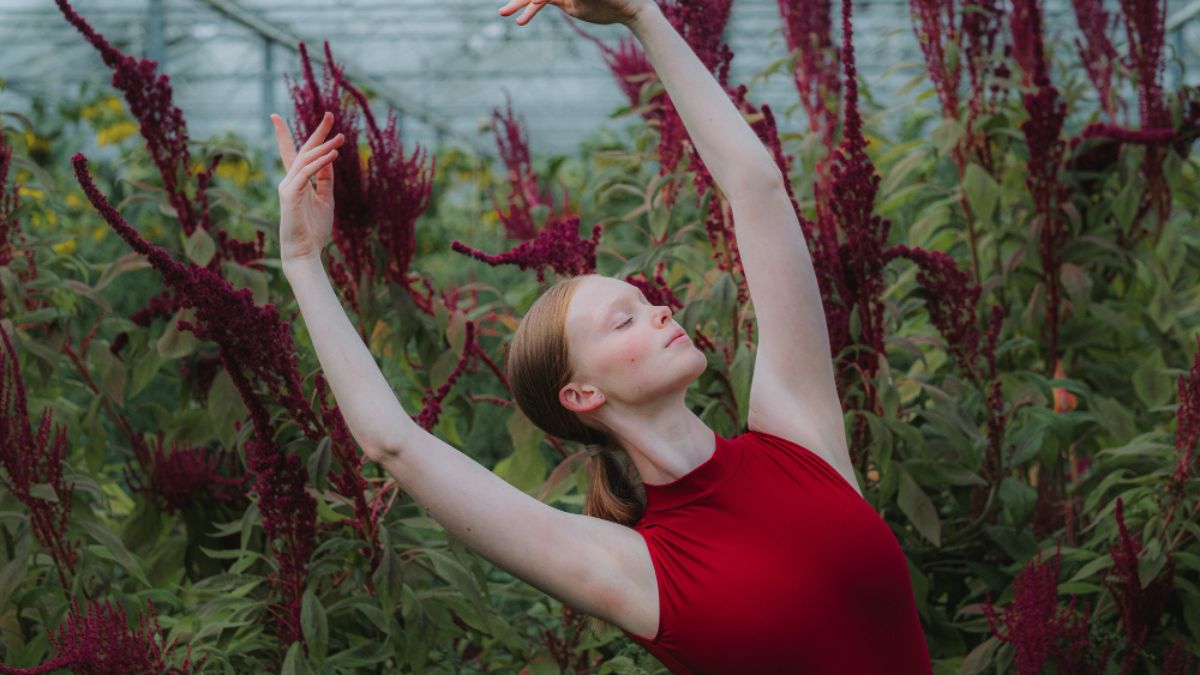
Lyposingrass, In the ever-churning world of fashion, where trends are born and die with the swiftness of a social media scroll, a new concept is emerging from the confluence of high technology, ecological melancholy, and a profound desire for tactile authenticity. It is not merely a fabric or a silhouette, but a philosophy, an aesthetic ethos, and a poignant commentary on our times. Its name is Lyposingrass.
The term itself is a portmanteau, a carefully crafted key to its meaning: Lyo from Lyocell, the high-tech, eco-conscious cellulose fiber, and singrass from the nostalgic, sun-bleached hues of vanishing prairie grass. It is the marriage of the laboratory and the landscape, the algorithmic and the agrarian. Lyposingrass is the fashion of the Anthropocene elegist—deeply sustainable, intelligently crafted, yet forever tinged with a bittersweet poetry for what is being lost.
To understand Lyposingrass is to move beyond the seasonal palette card. It is a full-spectrum sensibility encompassing fiber, dye, cut, and consciousness.
The Fiber of Our Being: The Lyocell Foundation
At its structural core, Lyposingrass is built upon the promise of next-generation cellulosic fibers, primarily Lyocell (specifically Tencel™) and its evolving cousins. Unlike traditional viscose, which relies on a chemically intensive process, Lyocell is produced in a closed-loop system, where solvents are recycled with remarkable efficiency. The raw material is often wood pulp from sustainably managed forests, making it a darling of the eco-fashion movement.
But for Lyposingrass, the appeal of Lyocell is not just its green credentials. It’s its inherent character.
-
The Luminous Drape: Lyocell possesses a uniquely fluid, heavy drape that rivals silk. It falls in soft, architectural folds, creating garments that move with a serene, liquid grace. This creates a silhouette that is both structured and soft—echoing the way long grasses bend in the wind, unified yet individual.
-
The Subtle Luster: The fiber has a gentle, inherent sheen—not the flashy gloss of polyester, but a muted, opalescent glow reminiscent of light hitting a dewy meadow at dawn. This luminescence is key to the Lyposingrass palette, allowing colors to hold depth and dimension.
-
The Tactile Paradox: Herein lies the magic. Despite its elegant drape, Lyocell has a subtly dry, almost crumbly hand-feel when woven in certain ways. It can mimic the soft, papery texture of dried seed heads, the delicate crispness of a fall leaf moments before it decays. This juxtaposition—visual fluidity against tactile delicacy—is the first tenet of the Lyposingrass ethos: beauty that acknowledges fragility.
The Palette of Memory: Colors Born of Earth and Algorithm
The Lyposingrass color story is where its soul truly emerges. It rejects the bold primaries of fast fashion and the muted neutrals of minimalism in favor of a complex, evocative spectrum. These are colors with memory, with weather in them.
-
Faded Verdants: Not the vibrant green of new growth, but the soft, greyed-down green of sagebrush, lichen, and prairie grass at the end of a long, dry summer. It’s the green of resilience, of holding on.
-
Dusty Aureates: The gold of Lyposingrass is never brash. It is the color of harvested wheat fields, of late-afternoon light filtering through pollen-hazy air, of the pale, tawny fur of creatures that inhabit these spaces.
-
Mineral Haze: Soft slate blues, misty lavender-greys, and chalky white, all reminiscent of river stones, distant mountain ranges seen through heat shimmer, and the bleached bones of the land.
-
Sun-Bleached Neutrals: The foundational shades are the complex off-whites of sun-bleached limestone, ancient linen, and the silvery underside of wind-blown grass.
Crucially, these colors are achieved through two primary methods that reinforce the philosophy:
-
Plant-Based & Mineral Dyes: Using madder root (for dusty pinks), walnut hulls (for deep brown-greys), indigo (for faded sky blues), and ochre clays. The process is often imperfect, yielding subtle variations and “memory lines” within the fabric—a celebrated feature, not a flaw.
-
Digital Color Mapping: Here, technology enters the poetry. Designers use spectral imaging to capture the exact color data of endangered landscapes—a specific swatch of threatened tallgrass prairie, a patch of moss in a melting tundra. This data is then used to formulate dyes or to guide digital printing processes, embedding a literal, chromatic memory of a place into the garment.
The Silhouette of Ephemerality: Cut and Construction
Lyposingrass clothing is designed for a body in gentle dialogue with its environment. Silhouettes are neither restrictive nor aggressively oversized. They are accommodating, with a focus on ease and a sense of being protected yet unconfined.
-
Asymmetric Hemlines: Reflecting the uneven, wind-sculpted lines of dunes and grassy knolls.
-
Layered Sheers: Using layers of finely woven, translucent Lyocell to create depth and a sense of atmospheric perspective, like looking through layers of mist or tall grass.
-
Texture-Focused Construction: Seam finishes that are visible, even celebrated, like the raised veins on a leaf. Smocking and shirring that mimic the patterns of erosion or bark. Laser-cutting to create delicate, lace-like patterns inspired by fractal geometry in nature.
-
The “Hollow” Garment: A key concept is creating volume that is empty, airy—a wide-leg trouser that billows, a sleeve that acts as a windsock, a coat with a cavernous, protective hood. It’s about creating space for the air, for the imagined spirit of the landscape, to inhabit the wearer.
The Patina of Time: Wear, Care, and the Narrative of Decay
In direct opposition to the cult of the new, Lyposingrass embraces a progressive patina. These garments are designed to age, to tell the story of their use, and in doing so, to deepen their beauty.
-
Fading as Feature: The plant-dyed pieces are expected to fade gracefully, moving from one nuanced shade to another, like a landscape transitioning from season to season.
-
Softening and Texturing: The Lyocell will become even softer, developing a personal map of wrinkles and creases that reflect the wearer’s life—the bend of an elbow, the fold of a cross-legged seat on the earth.
-
Mending as Art: Visible mending, using techniques like sashiko or boro, is integral. A rip is not a disaster but an opportunity to add a new chapter to the garment’s story, using contrasting or complementary threads, sometimes even embedding tiny, sealed seeds or fragments of pressed flora within the mend.
Care instructions are ritualistic, not an afterthought: “Hand wash in cool water. Dry flat on grass in dappled sunlight, if possible. Press with a warm iron over a linen cloth. Store with a sprig of lavender.” The act of maintenance becomes a mindful connection to the garment’s origin.
The Cultural Roots: From Land Art to Climate Grief
Lyposingrass did not emerge from a vacuum. It is the sartorial expression of broader cultural currents:
-
Land Art & Earthworks: The movement channels the spirit of artists like Andy Goldsworthy and Richard Long, who create transient, site-specific works from natural materials. A Lyposingrass garment is a wearable, personal earthwork.
-
Solarpunk Aesthetics: While Solarpunk often leans into vibrant, tech-optimistic futurism, Lyposingrass represents its “earthy cousin”—the grounded, mournful, yet hopeful strand that focuses on reconciliation and adaptation rather than pure escape.
-
Climate Emotion (Solastalgia): This is the heart of it. Solastalgia is a term coined to describe the distress caused by environmental change while one is directly connected to their home environment. Lyposingrass is a material response to this psychic pain. It allows the wearer to literally cloak themselves in the colors and textures of what is loved and lost, transforming grief into a tangible, beautiful artifact.
-
The Slow Data Movement: In an age of ephemeral digital data, Lyposingrass uses technology not for speed, but for preservation—capturing and holding the “slow data” of color, light, and texture from specific, threatened geographies.
The Lyposingrass Wardrobe: Key Pieces
Imagine a capsule built not for a week, but for a lifetime of subtle transformation.
-
The Prairie Shift Dress: A long, columnar dress in faded verdant, with a subtly uneven hem, side-seam pockets that sag with the weight of found stones, and a neckline finished with hand-stitched feather-stitching.
-
The Field Researcher’s Trench: A full-length coat in a mineral haze grey, cut with generous volume. Lined with digitally printed silk depicting topographical maps of a specific watershed. Fitted with tabs and loops to secure a sketchbook, a specimen pouch, or a simple walking stick.
-
The Dune Trousers: Wide-leg, high-waisted pants in dusty aureate, constructed from a crinkled, paper-textured Lyocell that whispers with movement. They are designed to gather sand at the cuffs and hold the shape of the wind.
-
The Lichen Cardigan: An open-weave, collarless jacket in a greyed green, featuring intentional “gaps” and mends that mimic the growth patterns of crustose lichen on rock.
-
The Seed Vault Scarf: A long, narrow scarf of sheer layers, encasing within its hem (via sealed, transparent channels) actual seeds from native, pollinator-friendly grasses and flowers—a wearable ark.
The Ethical and Economic Ecosystem
True Lyposingrass cannot exist within the conventional fashion system. It necessitates a new model:
-
Direct Landscape Sourcing: Partnerships with land trusts, conservation groups, and indigenous communities to ethically source dye materials and to fund the preservation of the very landscapes that inspire the colors.
-
The Designer-as-Biographer: The role of the designer shifts from trend-chaser to storyteller and archivist. Each collection is tied to a specific place, with a portion of proceeds dedicated to its conservation. The hangtag tells not just of fiber content, but of the longitude and latitude of its color inspiration.
-
Custodianship over Consumption: Garments are sold with a lifetime mending guarantee and the option to return them to the studio for “re-dying” or transformation at the end of their primary life, closing the loop not just chemically, but narratively.
Criticism and Contradiction
Lyposingrass is not without its paradoxes, which its most thoughtful practitioners openly engage with.
-
The Luxury of Melancholy: Is this a style only for the privileged who have the mental space to aestheticize ecological grief? The movement counters by emphasizing tangible action—the conservation funding, the support of sustainable agriculture—embedded in each purchase.
-
The Technology Paradox: It uses advanced technology (spectral imaging, closed-loop chemical processes) to create an aesthetic of primal, pre-industrial connection. This is not a rejection of tech, but a demand for its most thoughtful, Earth-literate application.
-
The Performance of Authenticity: Could it become a hollow aesthetic, the “sad beige” of climate concern? The focus on transformative wear, personal mending, and the physical ritual of care is the guard against this—the philosophy must be lived in the garment, not just worn.
Conclusion: A Garment for the Threshold
Lyposingrass is more than fashion. It is a wearable meditation for an era of profound transition. We are standing on the threshold between what was and what will be, amidst the sixth great extinction. This style offers a way to dress for that liminal space.
It does not offer naive hope or apocalyptic despair. Instead, it offers graceful witness. It allows us to carry the memory of luminous, fragile, beautiful ecosystems in the very fiber of our daily lives. It champions slowness, care, and the deep, poignant beauty of cycles—including the cycles of loss and regeneration.
To wear Lyposingrass is to understand that clothing can be a habitat. It can be a shelter for memory, a canvas for repair, and a quiet, steadfast statement that beauty and sustainability are not trends, but ancient, intertwined necessities. It is the sartorial expression of loving a world that is changing beneath our feet, and committing, stitch by mindful stitch, to its delicate, enduring repair.
In the end, a Lyposingrass garment is not about looking like the landscape. It is about feeling, on your skin, the story of light on grass, and accepting the solemn, beautiful responsibility of being one of the creatures who remembers it.